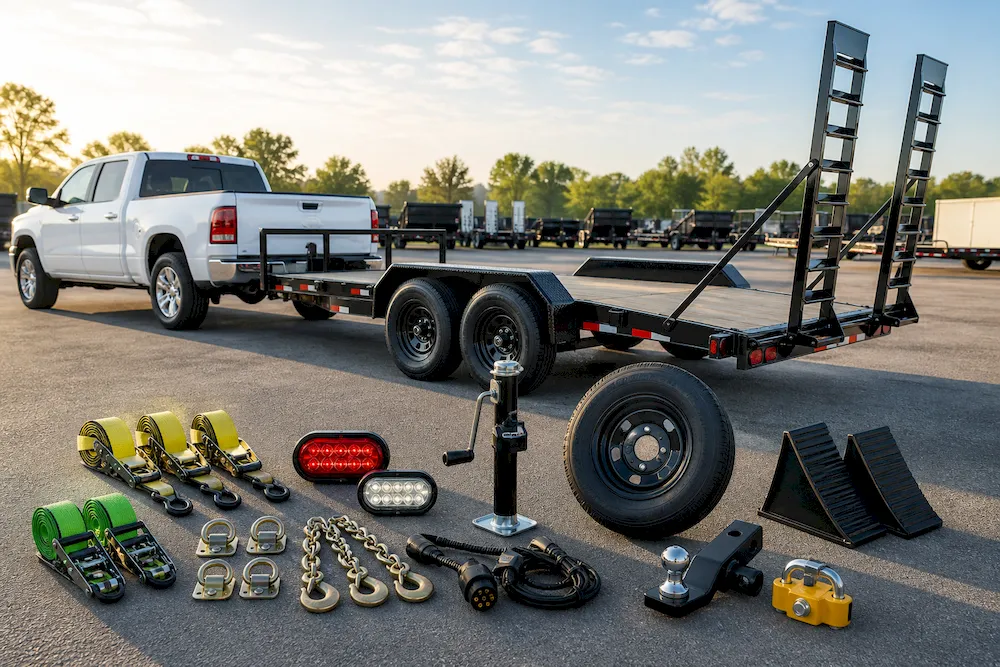
For fleet owners, trailers are not just simple transport tools. They are important business assets. A trailer helps move goods, equipment, machines, materials, and many other products. If the trailer works well, the business can run smoothly. If the trailer has problems, deliveries may be delayed, costs may increase, and safety risks may become higher.
That is why choosing the right trailer accessories is very important. Good accessories can improve safety, protect cargo, make daily work easier, and extend the service life of the trailer. Some accessories may look small, but they can have a big effect on long-term performance.
In this article, we will talk about the essential trailer accessories every fleet owner should consider.
Why Trailer Accessories Are Important for Fleet Owners
Trailer accessories help improve the way a trailer works. They are not only for appearance. Many accessories are designed for safety, protection, loading, storage, lighting, and maintenance.
For fleet owners, the right trailer accessories can help:
- Improve road safety
- Reduce trailer damage
- Protect cargo during transport
- Make loading and unloading easier
- Reduce maintenance time
- Improve driver convenience
- Extend trailer service life
- Lower long-term operating costs
When a fleet has many trailers, even small improvements can create big savings over time. A better lighting system, stronger tie-down parts, or a reliable jack can reduce problems and make daily operations more efficient.
Trailer Lighting Accessories
Trailer lights are one of the most important safety accessories. They help other drivers see the trailer clearly, especially at night, in rain, or in low-light conditions.
LED Trailer Lights
LED trailer lights are a popular choice for many fleet owners. Compared with traditional lights, LED lights usually last longer, use less power, and provide brighter visibility.
Common LED trailer lights include:
- Tail lights
- Brake lights
- Turn signal lights
- Side marker lights
- License plate lights
- Clearance lights
Good lighting helps reduce road accidents and keeps the trailer compliant with road safety rules.
Wiring Harnesses and Connectors
A good lighting system also needs reliable wiring. Poor wiring may cause lights to flicker or stop working. For fleet use, wiring harnesses and connectors should be strong, weather-resistant, and easy to inspect.
When choosing wiring accessories, check:
- Connector type
- Cable length
- Waterproof protection
- Plug quality
- Compatibility with the towing vehicle
- Resistance to vibration and corrosion
A clean and stable wiring system can reduce electrical problems and save repair time.
Trailer Tie-Down and Cargo Control Accessories
Cargo safety is very important for fleet owners. If cargo moves during transport, it may damage the trailer, harm the goods, or create road danger.
Ratchet Straps
Ratchet straps are common cargo control accessories. They help hold goods tightly in place. They are useful for transporting machines, boxes, pallets, motorcycles, construction tools, and many other items.
When choosing ratchet straps, consider:
- Working load limit
- Strap width
- Hook type
- Strap length
- Material strength
- Ease of use
Fleet owners should always use straps with the correct load rating. Using weak straps for heavy cargo can be dangerous.
D-Rings and Tie-Down Anchors
D-rings and tie-down anchors provide strong connection points on the trailer. They allow workers to secure cargo from different directions.
Good tie-down anchors should be:
- Strong enough for the trailer load
- Easy to access
- Properly mounted to the trailer frame
- Resistant to rust
- Smooth enough to avoid damaging straps
For commercial trailers, having enough anchor points can make cargo loading faster and safer.
Trailer Jacks and Stabilizing Accessories
Trailer jacks help lift and support the trailer when it is not connected to the towing vehicle. They are used every day in many fleet operations.
A-Frame Jacks
A-frame jacks are often used on utility trailers and cargo trailers. They are mounted at the trailer tongue and help raise or lower the front of the trailer.
They are useful for:
- Connecting the trailer to the vehicle
- Disconnecting the trailer from the vehicle
- Adjusting trailer height
- Supporting the trailer when parked
When choosing an A-frame jack, check the weight capacity, handle type, mounting size, and surface finish.
Swivel Jacks
Swivel jacks are often used on smaller trailers or trailers that need easy movement. They can swing up when the trailer is moving and swing down when support is needed.
This design can help save space and reduce damage during transport.
Stabilizer Jacks
Stabilizer jacks are used to keep the trailer steady when loading, unloading, or parking. They are especially helpful for trailers that carry heavy or uneven loads.
They can reduce trailer movement and improve work safety.
Trailer Couplers, Hitches, and Safety Chains
The connection between the trailer and towing vehicle must be strong and reliable. Couplers, hitches, and safety chains are key accessories for safe towing.
Trailer Couplers
A trailer coupler connects the trailer tongue to the hitch ball. It must match the correct ball size and trailer weight.
Before choosing a coupler, check:
- Ball size
- Tongue size
- Gross trailer weight rating
- Locking system
- Material strength
- Corrosion resistance
A good coupler should lock securely and be easy to operate.
Hitch Balls and Mounts
Hitch balls and mounts help connect the towing vehicle to the trailer. They must be strong enough for the trailer load.
Fleet owners should choose hitch parts based on:
- Trailer weight
- Ball diameter
- Shank size
- Drop or rise height
- Towing vehicle height
- Load rating
Using the wrong hitch height can cause poor trailer balance and uneven tire wear.
Safety Chains
Safety chains provide backup protection if the trailer disconnects from the towing vehicle. They are simple but very important.
Safety chains should be strong, properly crossed under the trailer tongue, and connected to secure points on the towing vehicle.
Trailer Wheel and Tire Accessories
Wheels and tires directly affect trailer safety and performance. The right accessories can make inspection and maintenance easier.
Spare Tire Carriers
A spare tire carrier keeps a spare tire safely mounted on the trailer. For fleet owners, this is very useful because tire problems can happen at any time.
A good spare tire carrier can help:
- Save storage space
- Keep the spare tire secure
- Make tire replacement easier
- Reduce downtime on the road
Lug Nuts and Wheel Hardware
Lug nuts and wheel bolts must be strong and properly fitted. Loose or damaged wheel hardware can create serious safety problems.
Fleet managers should inspect wheel hardware regularly and replace damaged parts as soon as possible.
Tire Pressure Monitoring
For larger fleets, tire pressure monitoring can be very useful. Low tire pressure can cause tire wear, overheating, poor fuel efficiency, and dangerous blowouts.
Keeping correct tire pressure helps improve safety and reduce tire replacement costs.
Trailer Protection Accessories
Trailers often work in tough environments. They face rain, mud, road salt, rocks, and heavy use. Protection accessories can help extend trailer life.
Mud Flaps
Mud flaps help block road dirt, water, and stones. They protect the trailer, cargo, and other vehicles on the road.
They are especially useful for:
- Construction trailers
- Farm trailers
- Utility trailers
- Heavy-duty trailers
- Long-distance transport trailers
Fenders
Trailer fenders protect the trailer body and cargo from road debris thrown by the tires. They also improve safety for people working near the trailer.
Fenders should be strong, properly mounted, and resistant to rust.
Corner Protectors and Edge Guards
Corner protectors and edge guards help protect trailer surfaces and cargo edges. They are useful when carrying boxes, metal parts, machines, or sharp materials.
These accessories can reduce damage during loading, unloading, and transport.
Trailer Storage and Tool Accessories
Fleet trailers often need tools, straps, spare parts, and safety items. Good storage accessories help keep everything organized.
Trailer Toolboxes
A trailer toolbox is one of the most practical accessories for fleet owners. It can store tools, straps, gloves, lights, repair kits, and small spare parts.
A good trailer toolbox should be:
- Strong
- Lockable
- Weather-resistant
- Easy to open and close
- Properly mounted
- Large enough for daily tools
Toolboxes can reduce lost tools and improve work efficiency.
Document Holders
Some fleet trailers need registration papers, inspection records, or transport documents. A waterproof document holder can keep these papers safe and easy to access.
This is helpful for compliance and daily management.
Trailer Loading Accessories
Loading and unloading are common daily tasks. The right accessories can make this process faster and safer.
Loading Ramps
Loading ramps help move equipment, motorcycles, small vehicles, or heavy goods onto the trailer.
When choosing ramps, check:
- Load capacity
- Ramp length
- Surface grip
- Material
- Width
- Storage method
A good ramp should be strong, stable, and easy to use.
Ramp Springs and Assist Systems
Heavy ramps can be hard to lift. Ramp springs or assist systems make ramp operation easier and safer. They reduce worker effort and help prevent injury.
For fleet owners, this can improve daily productivity and reduce labor risk.
How to Choose the Right Trailer Accessories
There are many trailer accessories in the market. Fleet owners should choose based on real use, not only price.
Check Trailer Type and Application
Different trailers need different accessories. A flatbed trailer, cargo trailer, boat trailer, utility trailer, and heavy-duty trailer may all need different parts.
Before buying, ask:
- What does the trailer carry?
- How heavy is the load?
- How often is the trailer used?
- What road conditions does it face?
- Is it used in rain, snow, mud, or saltwater?
- Does the driver need faster loading or unloading?
The answers can help you choose the most useful accessories.
Choose Durable Materials
Trailer accessories should be strong and long-lasting. Look for materials and finishes that resist rust and wear.
Common good options include:
- Galvanized steel
- Stainless steel
- Powder-coated steel
- Aluminum
- Zinc-plated hardware
- Weather-resistant plastic
For fleet use, durability is very important because trailers are used often and under different conditions.
Work with a Reliable Supplier
A reliable trailer accessories supplier can help you choose the right products and provide stable quality.
For B2B buyers, a good supplier should offer:
- Clear product specifications
- Stable production quality
- Custom options
- Fast communication
- Safe packaging
- On-time delivery
- After-sales support
Working with the right supplier can reduce purchasing risk and help build long-term business value.
Final Thoughts
Trailer accessories are important for safety, efficiency, cargo protection, and long-term performance. For fleet owners, choosing the right accessories is not a small detail. It is part of good fleet management.
Essential accessories such as LED lights, wiring harnesses, tie-down anchors, ratchet straps, jacks, couplers, safety chains, spare tire carriers, fenders, toolboxes, and loading ramps can all improve trailer performance.
The best choice depends on trailer type, load weight, working environment, and daily use. By investing in reliable and durable trailer accessories, fleet owners can reduce downtime, protect cargo, improve safety, and lower long-term costs.