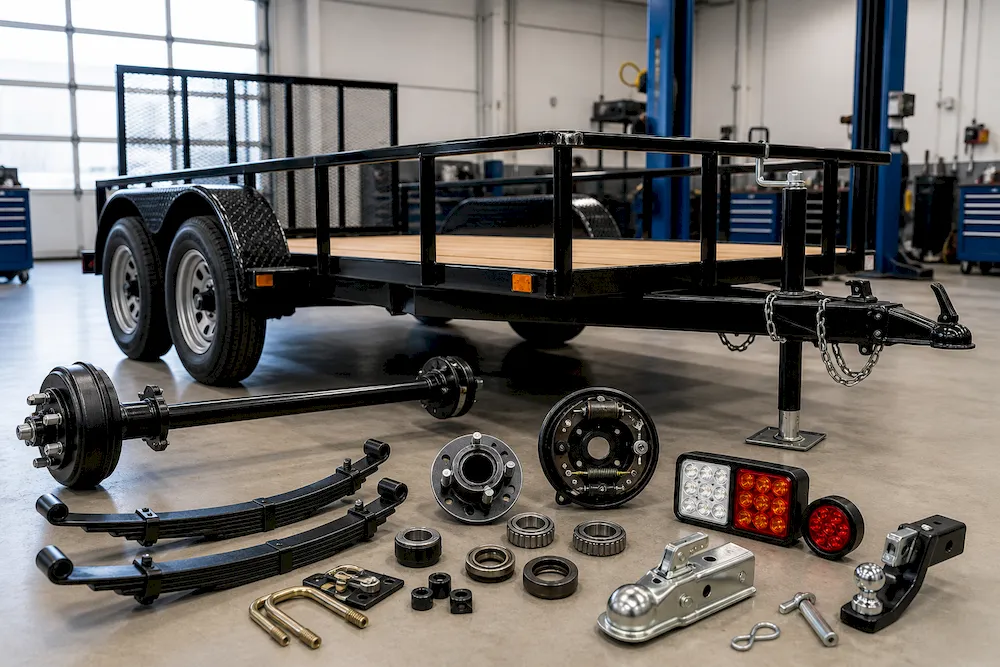
Choosing the right trailer parts is not only about fixing a trailer when something breaks. It is also about safety, performance, and long-term cost control. A trailer may look simple, but every part has an important job. If one part fails, the whole trailer may become unsafe or stop working.
For fleet owners, repair shops, trailer manufacturers, and distributors, using the right trailer parts can reduce downtime, improve towing safety, and extend the service life of the trailer. Whether the trailer is used for cargo, construction, farming, logistics, or personal transport, quality parts always make a difference.
In this guide, we will explain how to choose the right trailer parts for long-term performance in simple and practical language.
Why Choosing the Right Trailer Parts Matters
Trailer parts work under pressure every day. They carry heavy loads, face road vibration, and deal with different weather conditions. Poor-quality parts may save money at the beginning, but they often create higher costs later.
Good trailer parts can help you:
- Improve road safety
- Reduce repair frequency
- Protect cargo and equipment
- Lower long-term maintenance costs
- Keep the trailer working for a longer time
- Improve customer satisfaction if you sell or service trailers
For businesses, trailer downtime means lost time and lost money. A trailer that cannot work may delay deliveries, stop a project, or create extra repair costs. That is why choosing reliable parts from the beginning is very important.
Understand the Main Types of Trailer Parts
Before choosing parts, you should understand the main parts used on a trailer. Different trailers may have different designs, but most trailers include several key systems.
Trailer Axles
The axle is one of the most important parts of a trailer. It supports the trailer load and connects the wheels. If the axle is weak or not suitable for the trailer weight, it may bend, wear out quickly, or create safety risks.
When choosing trailer axles, pay attention to:
- Load capacity
- Axle length
- Brake type
- Hub size
- Suspension compatibility
- Road condition requirements
For heavy-duty trailers, it is better to choose axles with enough load capacity instead of using parts that are close to the limit.
Suspension Parts
Trailer suspension helps absorb road shock and keeps the trailer stable. A good suspension system protects the trailer frame, cargo, and other components.
Common trailer suspension parts include:
- Leaf springs
- Equalizers
- Shackles
- Hangers
- U-bolts
- Bushings
If the suspension parts are poor quality, the trailer may bounce too much, wear tires unevenly, or become difficult to control.
Trailer Brakes
Brakes are directly related to safety. A trailer with poor braking performance is dangerous, especially when carrying heavy loads or driving downhill.
Common trailer brake types include electric brakes and hydraulic brakes. The right choice depends on the trailer type, load, and towing vehicle.
When choosing trailer brake parts, check:
- Brake size
- Brake type
- Load rating
- Compatibility with the axle
- Quality of brake shoes, drums, and magnets
Never ignore brake maintenance. Even high-quality brake parts need regular inspection.
Trailer Hubs and Bearings
Hubs and bearings allow the wheels to rotate smoothly. They may look small, but they are critical for trailer movement.
Low-quality bearings can overheat, create noise, or fail during driving. A bearing failure may damage the hub, wheel, axle, and even cause an accident.
Choose hubs and bearings that match the axle and wheel size. Also make sure they are properly lubricated and sealed.
Trailer Couplers and Hitches
The coupler connects the trailer to the towing vehicle. This part must be strong, stable, and easy to lock.
When choosing a coupler or hitch, consider:
- Trailer weight
- Ball size
- Tongue size
- Locking system
- Corrosion resistance
- Safety chain connection
A weak or wrong coupler can cause serious towing risks. Always match the coupler with the trailer’s weight and towing setup.
Trailer Jacks
Trailer jacks help lift, support, and stabilize the trailer when it is not connected to the towing vehicle. For heavy trailers, a strong jack is very important.
Common types include:
- A-frame jacks
- Swivel jacks
- Drop-leg jacks
- Heavy-duty landing gear
Choose a jack with a higher weight rating than the actual trailer tongue weight. This gives better safety and longer service life.
Trailer Lights and Electrical Parts
Trailer lights are important for road safety and legal use. They help other drivers see the trailer at night, during rain, or when braking.
Common trailer lighting parts include:
- Tail lights
- Brake lights
- Turn signals
- Side marker lights
- License plate lights
- Wiring harnesses
- Connectors
LED trailer lights are often a good choice because they use less power and last longer than traditional lights.
Check Load Capacity First
One of the most important rules is simple: the part must match the trailer’s load requirement.
Every trailer part has a working limit. If the trailer often carries heavy loads, the parts must be strong enough. Using parts with a low load rating may lead to faster wear, damage, or safety problems.
Important Load Ratings to Check
Before buying trailer parts, check these ratings:
- Gross trailer weight
- Axle capacity
- Tire load rating
- Coupler capacity
- Jack capacity
- Suspension capacity
- Brake capacity
It is better to choose parts with a safe margin instead of choosing parts that only just meet the required rating.
Choose Parts Based on Trailer Application
Different trailers need different parts. A trailer used for light garden work does not need the same parts as a heavy-duty equipment trailer.
Utility Trailers
Utility trailers are often used for general transport. They need durable but cost-effective parts, such as reliable axles, lights, jacks, and couplers.
Cargo Trailers
Cargo trailers need stable suspension, secure doors, strong hinges, and reliable lighting. Since they often protect valuable goods, quality parts are important.
Boat Trailers
Boat trailers often face water and moisture. For this type, corrosion resistance is very important. Galvanized or stainless-steel parts are often better choices.
Heavy-Duty Trailers
Heavy-duty trailers need stronger axles, brakes, suspension parts, and couplers. For these trailers, safety and load capacity should always come before low price.
Pay Attention to Material and Surface Treatment
Material quality has a big effect on trailer part life. Trailer parts often face rain, mud, road salt, and outdoor storage. If the surface protection is poor, parts may rust quickly.
Common Surface Treatments
Good trailer parts may use:
- Galvanizing
- Zinc plating
- Powder coating
- E-coating
- Stainless steel
- Painted finish
For wet or coastal environments, corrosion resistance is especially important. If your trailer is used near the sea, on farms, or in rainy areas, choose parts with better anti-rust performance.
Make Sure the Parts Are Compatible
A good-quality part is still useless if it does not fit the trailer. Compatibility is very important.
Before ordering, check the following information:
- Trailer model
- Part size
- Bolt pattern
- Mounting hole distance
- Axle size
- Hub and bearing size
- Brake type
- Wiring connector type
- Load rating
If possible, compare the old part with the new part. Measurements and photos can help avoid mistakes.
For B2B buyers, it is also helpful to work with a supplier that can provide technical support, drawings, or custom options.
Do Not Choose Only by Price
Price is important, but it should not be the only factor. Very cheap parts may have hidden problems, such as weak material, poor welding, bad surface treatment, or unstable quality.
A better way is to compare the total value.
What to Compare Besides Price
When choosing trailer parts, also check:
- Product quality
- Material thickness
- Load rating
- Finish quality
- Warranty
- Supplier experience
- Delivery stability
- Customization ability
- After-sales support
For long-term business, stable quality is more important than the lowest price.
Work with a Reliable Trailer Parts Supplier
A reliable supplier can help you choose the right parts and avoid many problems. This is especially important for wholesalers, distributors, trailer builders, and repair shops.
What Makes a Good Supplier
A good trailer parts supplier should offer:
- Clear product specifications
- Stable product quality
- Professional communication
- Custom manufacturing ability
- Quality inspection
- Safe packaging
- On-time delivery
- Support for repeat orders
If you need OEM or custom trailer parts, choose a supplier that understands drawings, samples, materials, and production standards.
Inspect and Maintain Trailer Parts Regularly
Even the best trailer parts need regular inspection. Maintenance helps prevent small problems from becoming big problems.
Basic Trailer Parts Inspection Checklist
You should regularly check:
- Tire wear and tire pressure
- Wheel bearings and grease
- Brake performance
- Axle condition
- Suspension bolts and bushings
- Coupler lock
- Safety chains
- Trailer lights
- Wiring connections
- Jack operation
- Rust or cracks on metal parts
For commercial trailers, regular maintenance should be part of the operating schedule.
When Should Trailer Parts Be Replaced?
Some parts can be repaired, but some parts should be replaced when they are damaged or worn.
Common Signs You Need New Parts
You may need to replace trailer parts if you see:
- Strange noise from wheels or bearings
- Uneven tire wear
- Weak braking
- Loose coupler connection
- Cracked springs
- Rusted or broken bolts
- Flickering trailer lights
- Bent axle
- Damaged jack
- Trailer pulling to one side
Do not wait until a part completely fails. Early replacement is usually safer and cheaper.
Final Thoughts
Choosing the right trailer parts is important for safety, performance, and long-term value. The best parts are not always the cheapest parts. They are the parts that fit correctly, carry the required load, resist wear and rust, and work reliably over time.
Before buying trailer parts, always check the trailer type, load capacity, material, compatibility, and supplier reliability. For business buyers, working with a professional trailer parts manufacturer or supplier can help reduce risk and improve long-term results.
With the right parts and regular maintenance, your trailer can work safely, smoothly, and efficiently for many years.